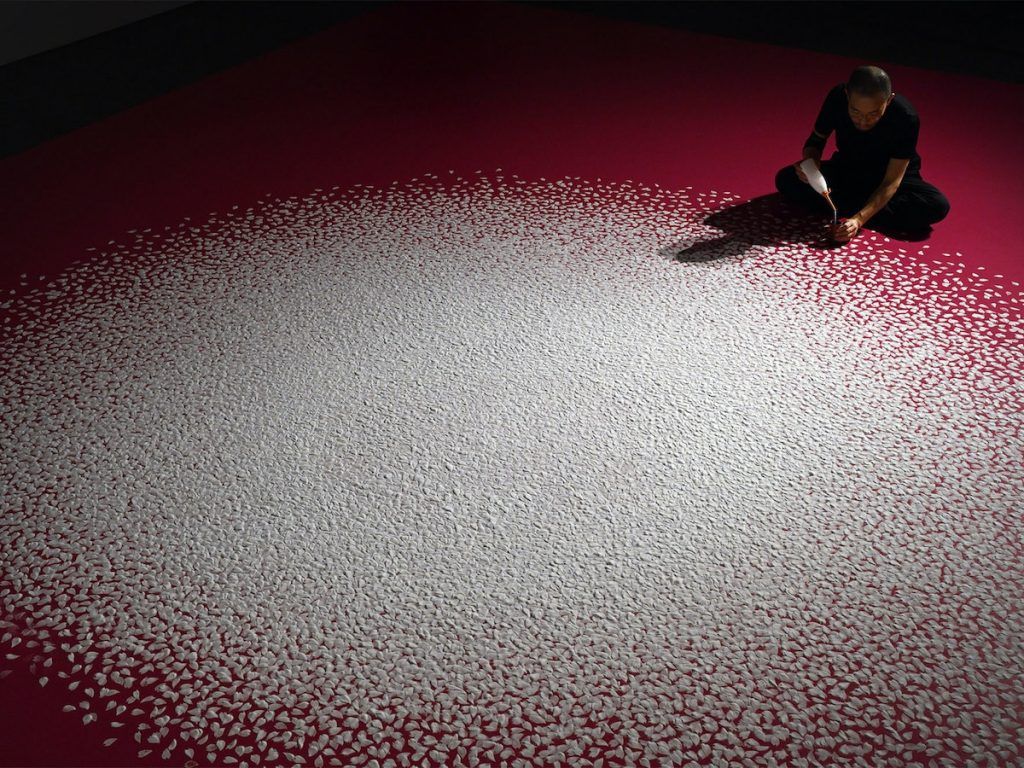
What do people think when they see innumerable petals strewn across the ground after the beautiful season when flowers bloom? I create these countless scattered flowers upon the earth not to draw attention to the flowers themselves, but rather to encourage reflection on the limbs and trunks that supported these gorgeous cherry blossoms, as well as the stamens and pistils that are the key to the next generation.
Sakurashibe-furu (falling cherry stamens) is a seasonal word used in haiku for late spring.Sakurashibe-furu (falling cherry stamens) is a seasonal word used in haiku for late spring. For many people, this is also the time when they lose interest due to the flower season being over. However, I want to feel a connection with life by thinking about late spring, when the crimson stamens clinging to boughs fall, and the season when fresh greens appear. This work was born from the desire to ponder the past and future, things invisible to the naked eye.
Cherry trees, particularly the Yoshino variant, hold a special meaning for many Japanese people. This flower, which seems to revel in the brevity of life, blooms abundantly during the spring season of school enrollment, graduation, new meetings, and partings of ways. It is beloved by all, and has become deeply associated with spring in Japan. The work “Sakura” is an installation in which symbolic petals of salt are stacked on top of one another. There are tens or even hundreds of thousands of these petals, and the countless overlapping shards of salt exude both beauty and ephemerality.
Since 2001, Motoi Yamamoto’s projects have taken place all over the world, realising ephemeral, complex and large-scale installations exploring themes of mourning, pain, loss and memory. Jerusalem, New York, Tokyo, Mexico City, Athens, Seoul, Hamburg, Hamburg and Charleston. He relieves his sadness through repetitive artistry while expressing his longing for his sister. The rhythmic, meticulously ritualised movements of his hands as he pours salt on the floor are reminiscent of the repetitive chanting of scripture by monks in prayer. Mufson (2016) states that the artist is in a trance or meditative state for several hours during the creative process.
For Yamamoto, the creative process is more than just a meditation; the artist is clearly striving to create a decorative appearance. According to Hasegawa (2015), the way the artist pours the salt is similar to a hurricane, a glacier, a labyrinth, or a lace weave , and the resulting purely decorative appearance sometimes masks the meditative aspect of the work, drawing the viewer in with pure beauty.
This art form demonstrates art healing in a more intuitive way, whereby both the creator himself, and the viewer themselves, gain a calming force that is not majestic, but rather one of equanimity, and his works often demonstrate the cycle of life and death, such as the ‘sakura shibefuru’ pictured here, which seeks to frame the countless flakes of flowers in the twilight of spring exuding a beautiful and ephemeral scent that evokes a new lease of life in the future.
Last week Sasha asked me why schools need to add self-soothing activities, can’t students just practice on their own at home? I now understand that students of design and art are inherently more sensitive, and because of this sensitivity they need to gain energy in the form of self-expression. Therefore, this group is also more vulnerable, as my previous research data shows, students studying fashion design are facing depression sooner or later, and schools can actually intervene in this situation in a more caring way. Therefore, the self-soothing approach for this group should also be provided from a more artistic point of view, as well as the fact that most of the fashion colleges are not quite like the traditional schools, where there is not a strong correlation between the classes, and there are almost no clubs within the school, as well as a stronger competition between the students.
If the school could organise more and more healing activities, it would also strengthen the connection between people. The idea that I value the connection between people comes from the director Hirokazu Koreeda, who in his book “What I’m Thinking About When I’m Making a Movie” mentions that in the West, death begins at the end of life, meaning that life and death are two opposing concepts, but in the East (especially in Japan), life and death are one and the same, and the relationship between the two is even a bit intimate. Death does not necessarily begin at the end of life; it often exists within life. In this concept, he tries to present that it is better to discover the meaningless but enriching life. “Life has its flaws and needs to be filled by others.”
I interviewed a high pressure work director friend, because usually there are a lot of big brand cars, costumes or celebrities shooting, often need to go in and out of the wilderness in pursuit of a larger scene, stay up all night is also the norm, I asked him how he overcame, he said that things to do a less one, as a breakthrough on it, do not take too many personal emotions, do not feel aggrieved and so on. In fact, I admire this, because when I was 20 years old studying in Japan, I realised that I didn’t seem to have a particular style I liked, and I didn’t even have a preference for food, I felt a tinge of desolation, so I went crazy exploring my own preferences and tapping into my personal style during that time, and it’s true that I found my way later on, but the side effect was that I became emotionally sensitive, and it was as if I couldn’t be happy and simple as I was before or that I could reap the benefits of happiness by learning a certain skill. I can’t be as happy and simple as I was before, or learn a certain skill to reap the benefits of happiness, so now I feel aggravated and tired at work, and it’s hard to get rid of it. I can do things from a rational point of view, and overcome the difficulties, but I think it would be hard for me to regain my resilience if I go on for a longer period of time, so I have to find the way to be happy, in order to be more sustainable.
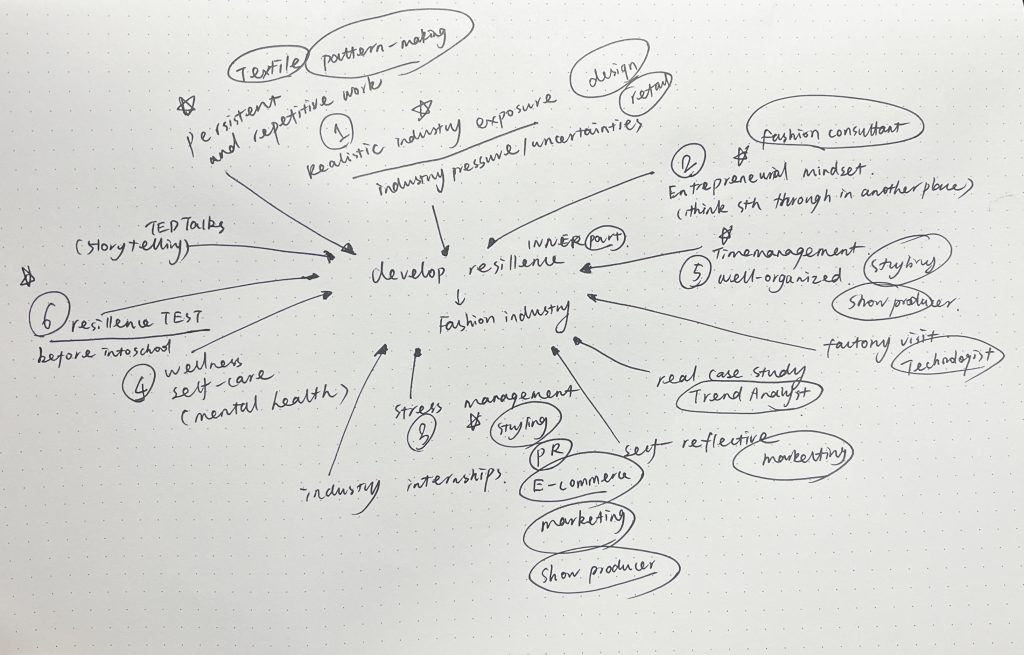
In fact, regarding the training of the ability of resilience, I may not have made it clear in yesterday’s tutorial about the case of the Japanese pattern maker’s exam. When I met many Japanese friends at the Tokyo popup in August, they were still doing what they were doing four or five years ago. They love fashion, but it’s true that it’s hard for them to support themselves, so they would do another job as a subsidy, and the reason why they can still hold on to it is because, from the very beginning of the education system, in the case of the Bunka Fashion College, the curriculum every day is very boring and routine, and it’s actually very much like going to work. So I think it’s also for this reason that their imagery of work is so close to the real thing that they can continue to do it, and maybe it’s about inner standards, so I’m also thinking about whether it’s just about doing more seemingly boring and repetitive training in the beginning, and being able to accept that blandness and reciprocity is actually a much harder quality to achieve than education about setbacks, or maybe it’s just that they just think it’s a daily friction rather than a setback. And then build greater energy in the blandness.
Perhaps I would find the current curriculum of RESILIENCE in colleges and universities too blunt, as well as an education that I believe in more than anything else, if you want to learn something, not just that, but understand it from your own point of view by learning something else. Just like studying fashion, you should probably study more about culture, history, philosophy, economics, etc. than just fashion, so resilience training is the same thing.
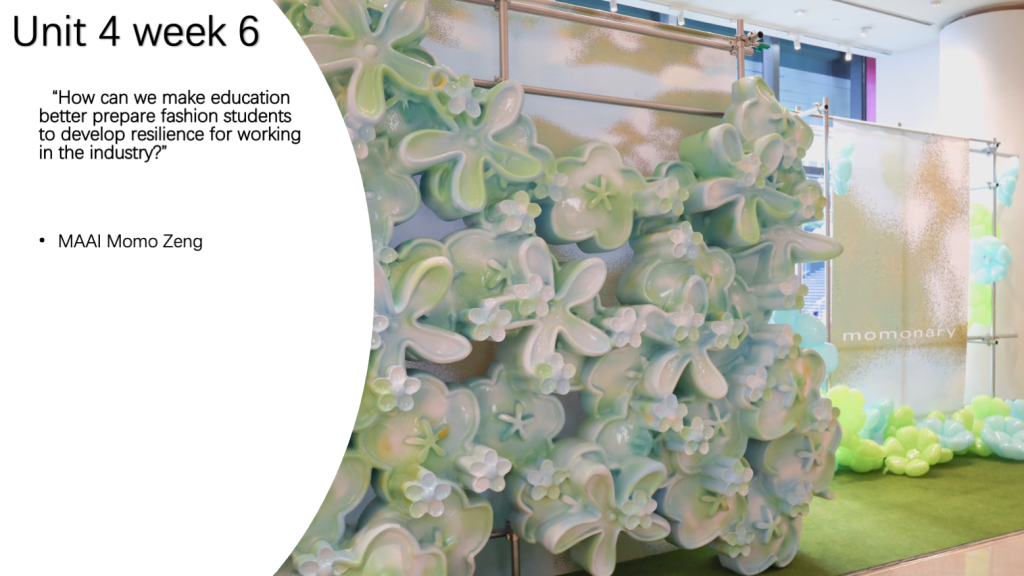
“How can make education better prepare fashion students to develop resilience for working in industry?”
As the project continues, from the beginning of wanting to reform fashion education, to how to convey the real fashion industry, now more and more I feel that the most important thing lies in the inner strength of the educated people themselves, thanks to David for helping me to sum up the word resilience.
Resilience refers to the ability to adapt, recover, and thrive in the face of adversity, challenges, or setbacks. It involves developing inner strength, psychological flexibility, and coping mechanisms to navigate difficult situations and emerge stronger. Resilience is not about avoiding difficulties but rather about facing them with a positive mindset and effective strategies. It is a valuable trait that can be cultivated and nurtured over time.
The fashion industry is known for its fast-paced trends, demanding schedules, and creative pressures. Here’s how resilience plays a significant role in the context of the fashion industry:
Networking and relationship-building are crucial in the fashion industry. Resilience fosters the confidence to engage with peers, mentors, and potential collaborators, leading to valuable connections.
Fashion trends evolve rapidly. Professionals in the industry, from designers to marketers, must quickly adapt to changing consumer preferences, technological advancements, and market shifts. Resilience helps individuals embrace change and see it as an opportunity rather than a setback.
Deadlines in the fashion industry can be tight and stressful. Resilience enables professionals to manage pressure effectively, stay focused on tasks, and deliver high-quality work within constraints.
Long hours and demanding schedules can affect work-life balance. Resilience encourages setting boundaries, practicing self-care, and prioritizing well-being despite industry pressures.
In the fashion industry, rejection is common, whether it’s from potential clients, buyers, or audiences.
Meeting the diverse demands of consumers and catering to different segments of the market requires adaptability and resilience.
For example, How to apply resilience in fashion shooting?When shooting outdoors, we want to capture the moment when the model throws the fruit, showing the natural and comfortable atmosphere, the camera intercepts the moment there are always a lot of uncertainties, you need to adjust over and over again, such as composition, angle, the time of throwing, the relationship between the front and back of the characters.
At the final tutorial opportunity, we agreed that this INTERVENTION could be a game about measuring Fashion Student Resilience and wanted to do a more fun test, In the first class I joined David’s group, he had us test our mbti, and I didn’t realise that the project was so closely related to personality testing even today! Because it involves Psychometrics and still in preliminary theoretical research. I have researched that there are many schools that have Resilience Programs.
The following cases are known.
– The Princeton Perspective Project
– The Resiliency Project at Stanford University
– The Success‐Failure Project at Harvard University
– The [IM]Perfection Project at Vanderbilt University
– The Resilience Cooperative at Tulane University
What Japanese young people are doing after graduating from Bunka fashion college for five years.
In August, I came to Tokyo to hold an offline popup, a place I had been away from for five years, since graduating from Bunka Fashion College.
I stayed at my Japanese friend minayo’s home this time, and every day we talked about a lot of things, but most often we talked about our dreams, the current situation of our former classmates, and interesting stories from our previous school days.
minayo‘s home
I was surprised to find that most of my classmates were still in the fashion industry, just not founding their own brands.
Young people in Japan can find a balance between their dreams and reality. At the moment, I have learnt that almost everyone has two jobs, one is about fashion sticking to their dreams, and the other is about making a living, and people can clearly perceive the gap between the both. They are adapted to doing a time for a long period of time and regularly with few complaints. I recalled that when I was studying at Bunka, we might stand all day for stand-up cutting and pattern making, and maybe this long training is also closer to the real work environment. Creativity is only part of the process, how to implement it is the long way to go!
As well as one thing that made me very surprised and ashamed, minayo was doing laundry one morning, I asked her if we hadn’t just done laundry last night, she said it was because she had just gone for a run at 6:00 a.m., I asked if she was losing weight, and she laughed and said that running like that once in a while made her happy, and I saw the purity in minayo’s attitude, and that you don’t always have to have a purpose to do a lot of things. Maybe that’s why they have been in the fashion industry for a long time, because they love to make clothes, so they keep doing it!
The boring side of the fashion industry
The fashion industry, often associated with glamour and creativity, also has a less glamorous and more mundane side that is crucial to its functioning. This “boring” side is characterized by various administrative, logistical, and operational aspects that are essential for the industry’s success but may not receive as much attention as the glamorous aspects.
Aside from the rush and intensity, a large part of the real side of the fashion industry lies in the cumbersome process of matchmaking. Common docking tasks are:
Supply Chain Management: Coordinating the production and distribution of fashion products involves managing complex supply chains with multiple stakeholders, including suppliers, manufacturers, transporters, and retailers. Ensuring timely deliveries, managing inventory, and mitigating supply chain disruptions are critical but often overlooked aspects.
Inventory Management: Keeping track of inventory levels, optimizing stock turnover, and managing excess stock can be a meticulous and detail-oriented task that contributes to a fashion brand’s profitability.
Data Analysis and Forecasting: Analyzing market trends, consumer behavior, and sales data to make informed decisions about production, pricing, and marketing requires in-depth data analysis and forecasting. This analytical work may not be as glamorous as designing, but it’s vital for business success.
Regulatory Compliance: The fashion industry is subject to various regulations related to manufacturing, labeling, safety, and sustainability. Ensuring compliance with these regulations can be a complex and time-consuming process.
Sourcing and Procurement: Identifying reliable suppliers, negotiating contracts, and sourcing materials at competitive prices are crucial steps in the production process that require attention to detail and negotiation skills.
Logistics and Shipping: Coordinating the movement of raw materials and finished products across borders and continents involves managing customs procedures, shipping costs, and delivery timelines.
Quality Control: Ensuring the quality and consistency of products is an ongoing effort that involves rigorous testing, inspection, and adherence to quality standards.
Financial Management: Managing budgets, tracking expenses, and optimizing financial operations are necessary for the sustainability of fashion businesses.
Administrative Tasks: Like any other industry, fashion requires administrative tasks such as record keeping, payroll management, and legal documentation.
E-commerce Operations: Managing online sales platforms, handling customer orders, shipping, and returns require dedicated personnel and attention to detail.
Marketing Analytics: Behind every successful marketing campaign are extensive analyses of customer engagement, conversion rates, and ROI, helping refine strategies for better results.
I am more involved in event planning, which involves event co-operation, as well as programme planning, set-up design, communication with the build team, communication with the dessert and drinks supply chain, and event insurance and security reporting. The difficulty of the activity is that there are many time points to be respected in the same period, for example, when designing the programme it is necessary to dock with the factory to the production cycle of the device and the price of the budget,down to the licence plate of the lorry and the time of unloading. To tell the truth, the risk and resilience of the event is a part of me that I still find overwhelming after five years in the industry. There are always unexpected mistakes, and how to quickly salvage them and make trade-offs has become something I need to think about on a daily basis.
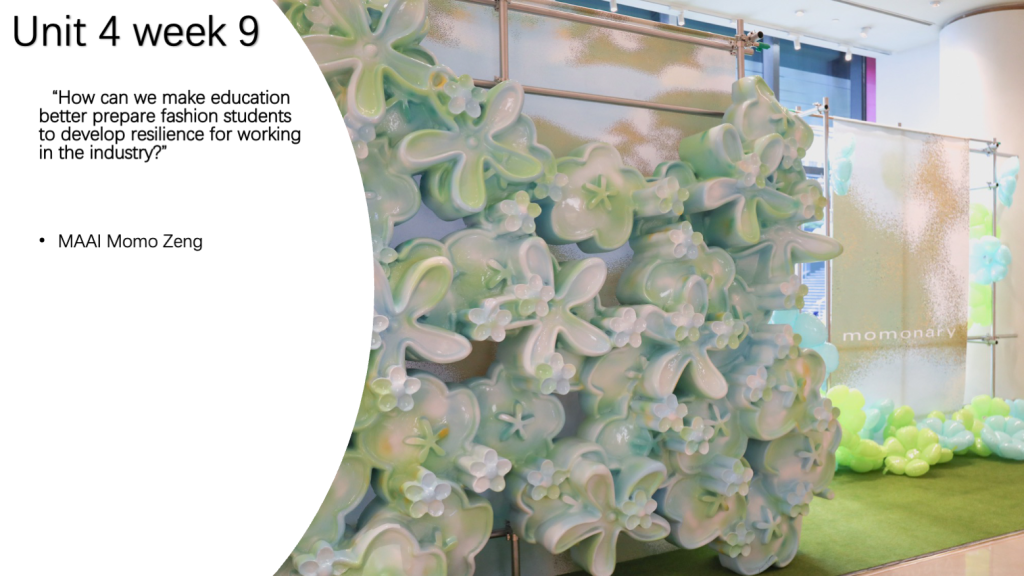
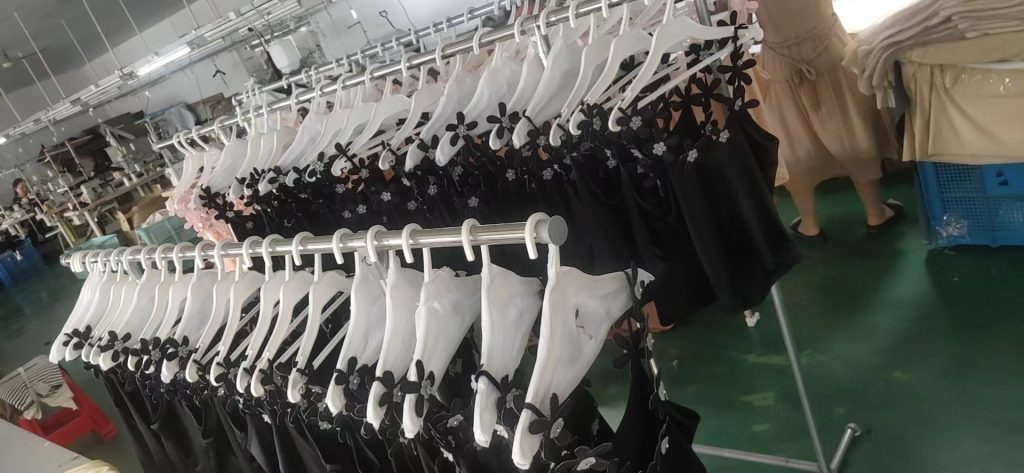
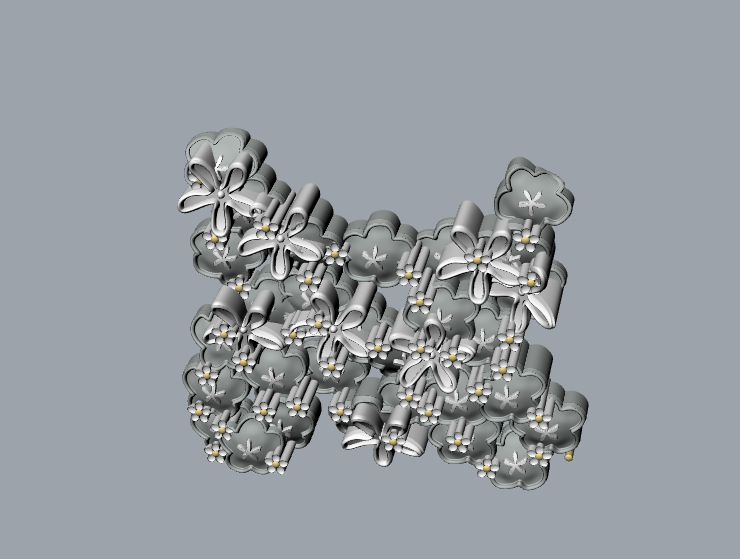
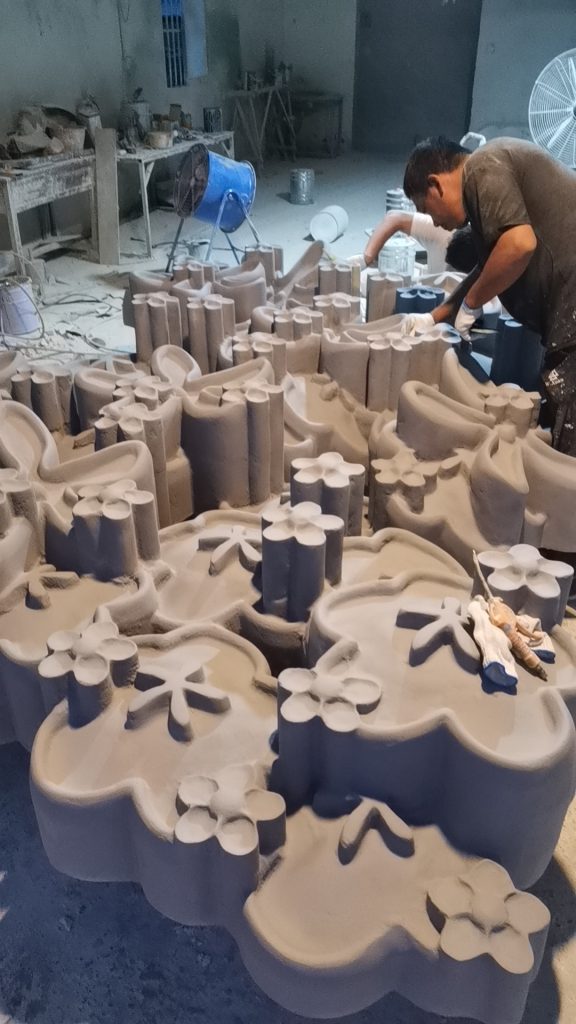
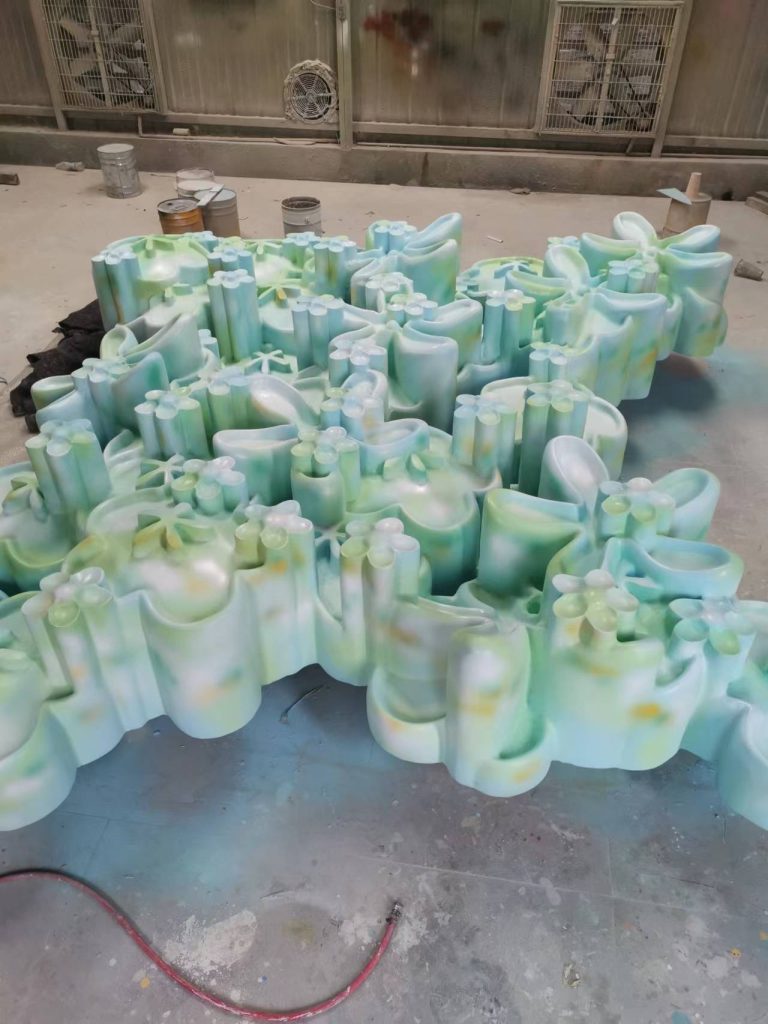
As a simple example, for the flower vest installation of the popup, we have been searching for factories and confirming the process from the very beginning when we first had the idea, during this period we spent two weeks communicating with 18 factories, and only one of them was willing to make it within our budget. Many factories even found the model difficult to make and were not willing to put in the effort, so we also made several revisions on the 3D model. Subsequent adjustments in size were also made 4 times, and it took 6 phone calls to finalise the process screening. The final challenge was to get the installation to stand up safely. This issue has not yet been fully resolved.
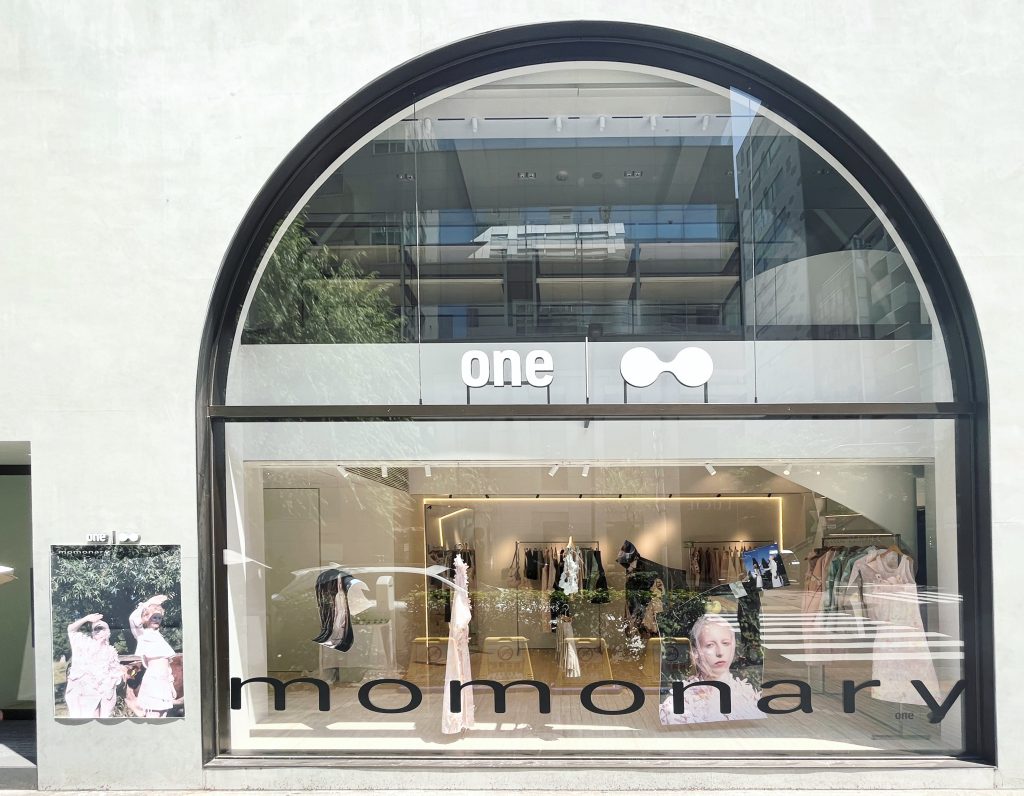
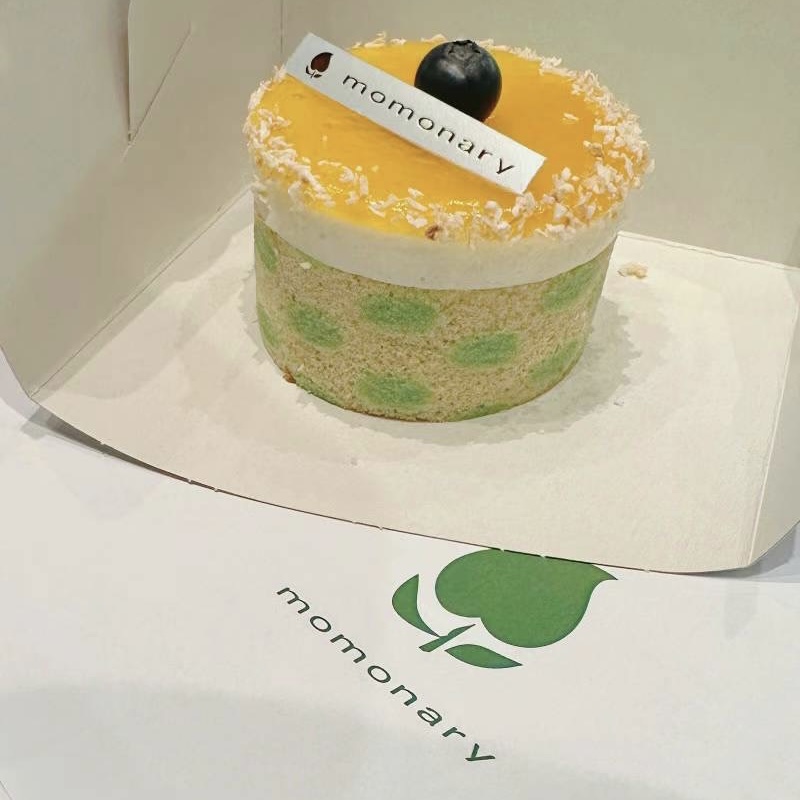
Role-playing for momonary 2023AW presentation
My project revolves around “How can fashion education present realistic self-image to promote attainable pathways to potential students?” I’m a firm believer that transparency is the most important step in how to demystify the fashion industry. Provide transparent information about the different roles and responsibilities within the fashion industry. Highlight both the successes and challenges that professionals face, giving potential students a balanced perspective. So with my INTERVENTION, I wanted to give more students with no experience in this area a chance to experience it from a practitioner’s perspective!
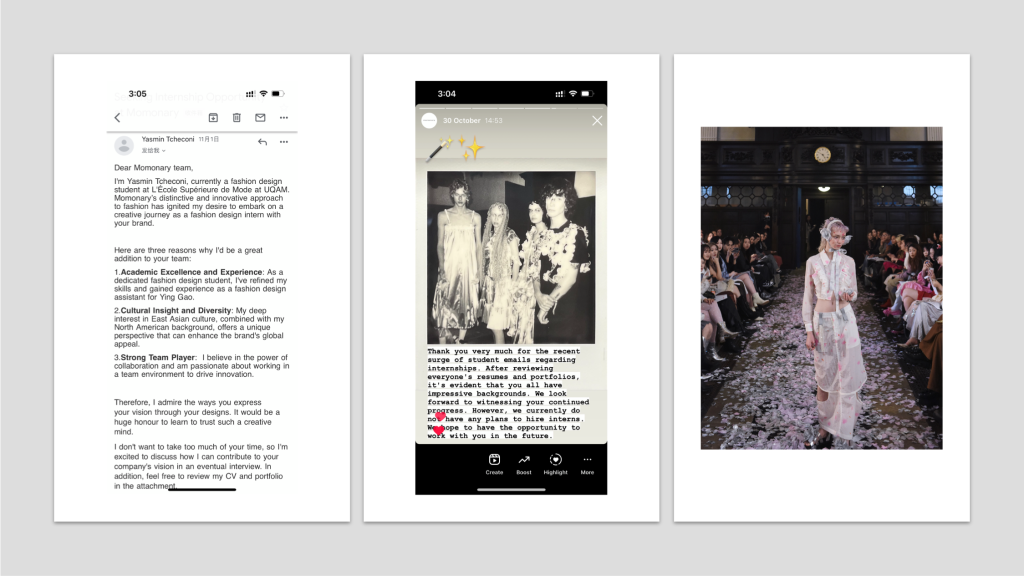
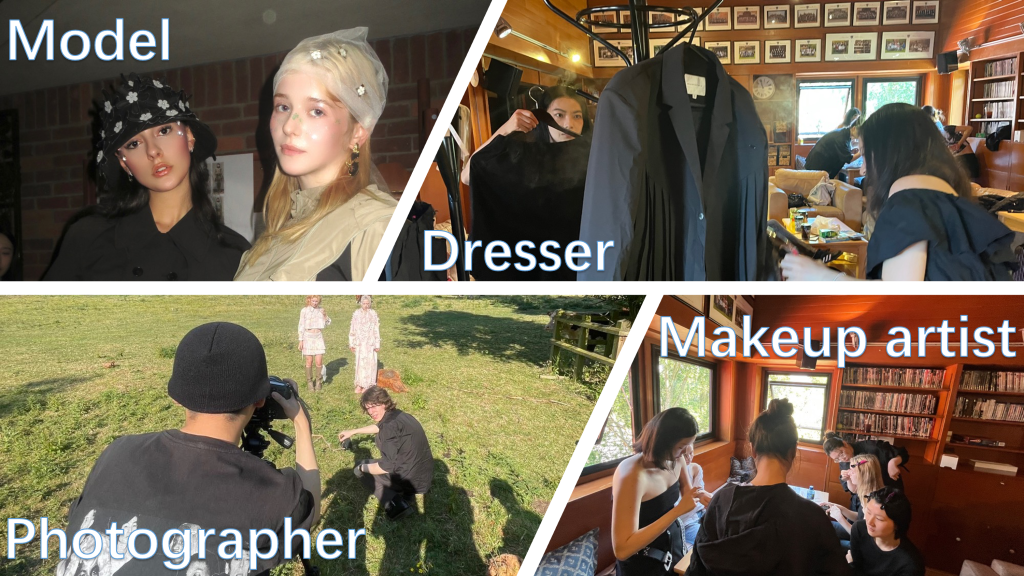
Firstly, for the presentation on 6.16, I invited my classmates to participate in our presentation in different roles. I invited Cheyenne as our show model, Patrick as our photographer, Yuxin as our make-up artist member, and Shuang and Weiyao for backstage dressing! There were also eight students who were spectators of the show, enjoying the sights and tastes of the desserts prepared by us. Models and photographers were always waiting, make-up artists never had enough time, and backstage was as chaotic as ever, an experience that added to the panicked and highly stressful day for MAAI’s fellow classmates!
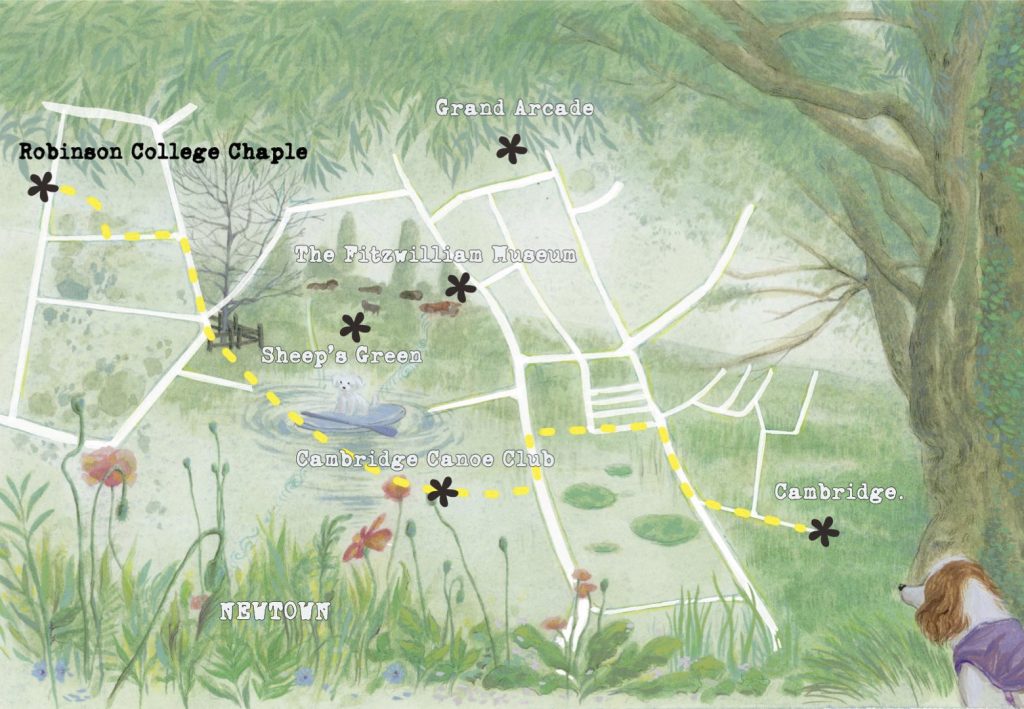
Undoubtedly, the most joyful part of the show is the audience, enjoying delicious desserts while watching the models walk the runway, and we have designed the path to the show venue in such a way that we want everyone to feel the relaxation and pleasure of being in nature.
We had to travel to Robinson chapel in Cambridge in the morning to get ready for make-up, shoot the lookbook in between rehearsals and then shoot the campaign after the show, which was an unprecedented challenge for us! To save time, make-up teams are assigned work and taught on the train. In the meantime, the production partner needs to keep a record of everyone’s avoidance at this point in time for the lunch order to be placed.
This means that the presentation will undoubtedly be a large team work, and will also require everyone to work on different tasks at the same time. The difficulty of this intervention was that I invited classmates as staff, and almost none of them had any experience in this field. We ensure that the day is silky smooth by double checking the time totals, as well as confirming the process in groups.
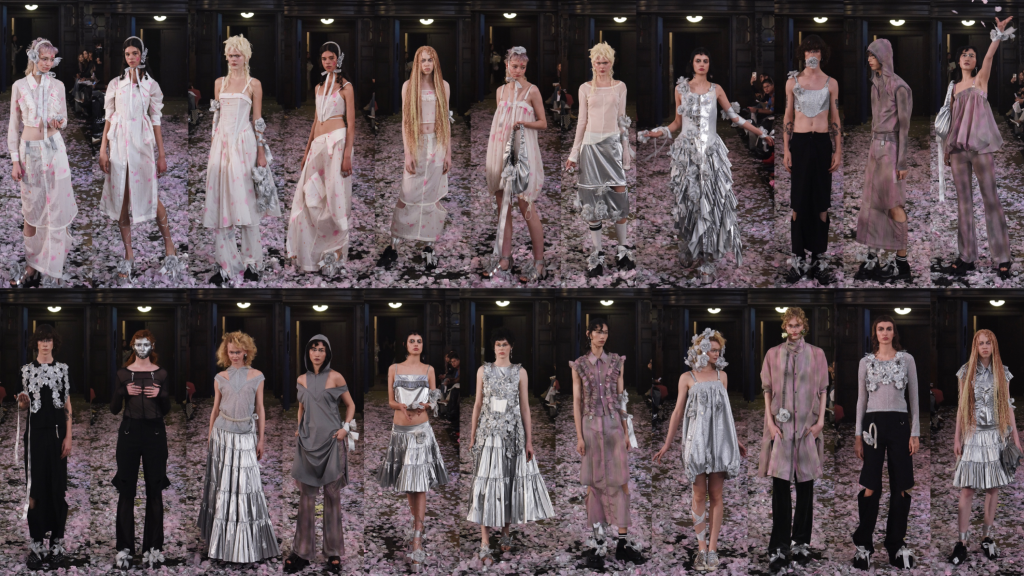
Fortunately, the presentation was successfully completed, and many of the audiences who came to see the show were fashion students, and gave feedback that they felt the healing power of the show! And one of the girls studying textile at the RCA said that a lot of her initial research for her final project was inspired by Momonary!
6.6 some thoughts about intervention

To be honest, at the beginning of my studies, I was confused about the action of intervention and how to define it, and I am sceptical about the first semester of intervention, is this really the way to get real feedback? However finally, I got a convincing explanation that intervention is a research tool by myself. This means that it depends on the way I want to research my personal project. I also realised that the quality of the act of intervention was particularly important.

My research question is “How can the fashion education present realistic self-image to promote attainable pathways to potential students?”

There are so many overlapping relationships to discuss in this question that intervention also makes it tricky for me to visually analyse whether it is valid through a single variable, and there are so many variables that it makes me weak for a while.

Although many tutors said at the beginning that the subject was very broad, I persevered, the theory being that the more you know about the field, the more valuable the project will be, and that it was a good journey for me to reflect on the nine years of my study and work life.

I believe that one research session, or one conversation, will give me a clearer picture of the issues that interest me most and that are within my reach.

The most valuable thing about intervention for me is that I hope it will resonate with each other. I have always been envious of Avatar's ability to exchange thoughts and memories through tentacles, and there are a lot of things I can't express, but I hope I can convey more of my attitude towards fashion and life through the atmosphere of the event.

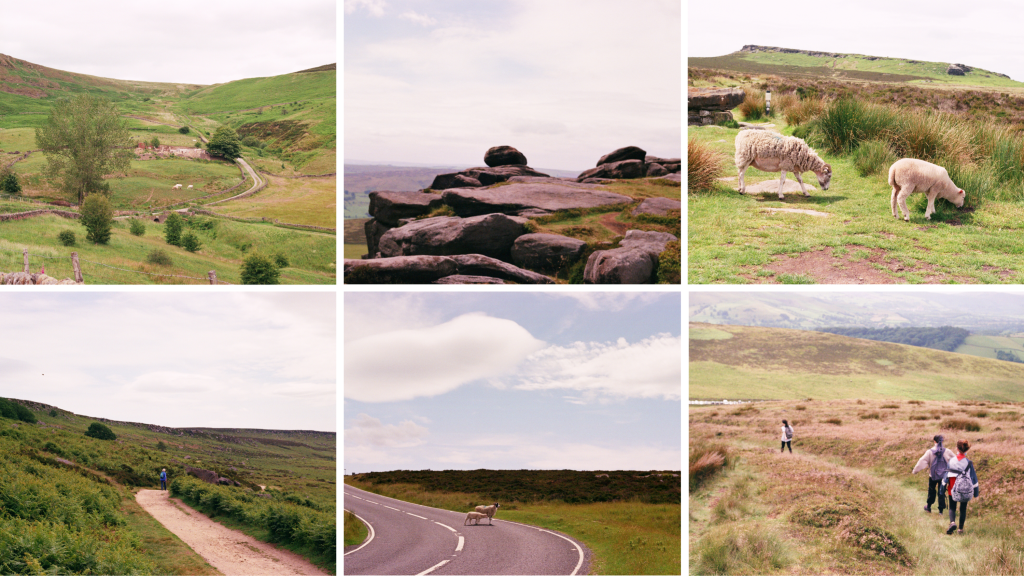
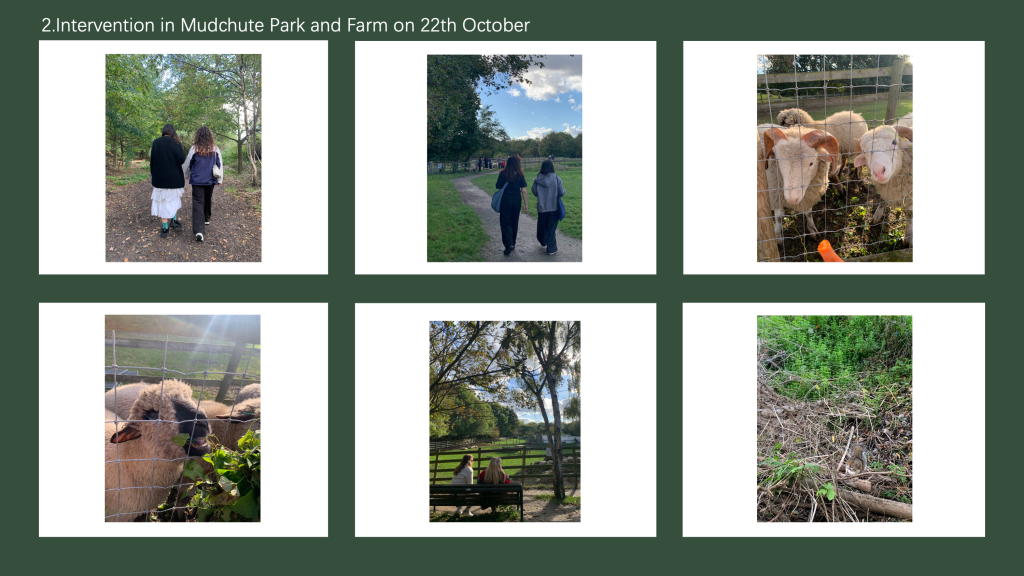
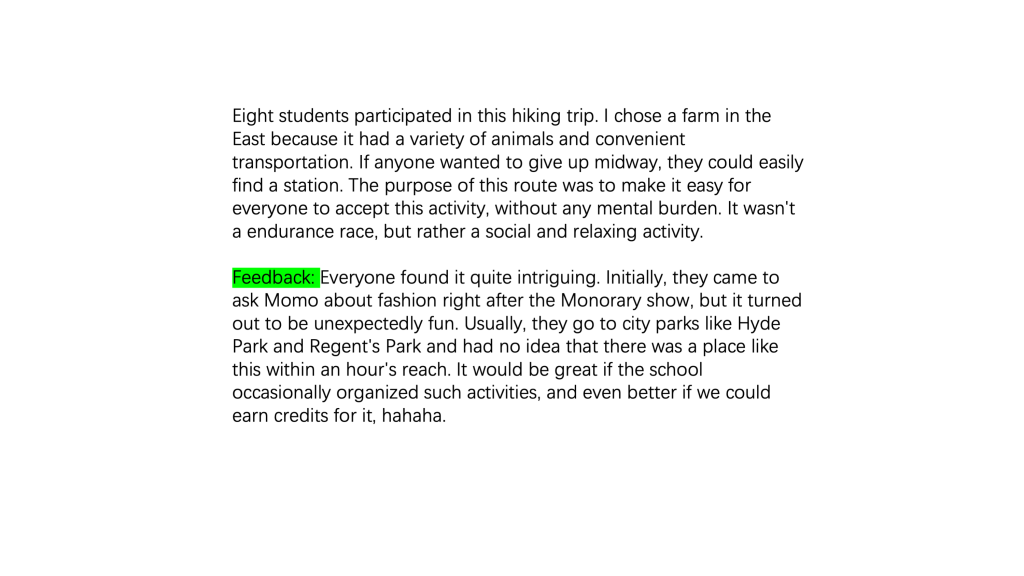
In preparation for this presentation, I went to Cambridge almost every week. This time the theme is into the woods. To be honest, the reason for doing this theme is that I've been walking a lot this semester as well because of the two-month-long home isolation in Shanghai last year, which left me craving energy from nature. Every time I hike, I lament my insignificance, but because of that it seems to make the gains and losses even less important.
That said, the walk in the forest also has something in common with my ideal model of education, where a journey of a thousand miles begins with a single step, and where education should be more about personal experience, but perhaps more importantly, personal stability of mind and generous acceptance.
6.3 Grit

I really struggle to keep up with blogging, although I do internally recognise it as a good way to document developments and processes, probably because I'm so bad with computers hahahahahahahahahaha, but luckily I've been using my phone memo to document the process.

What made me feel like I wanted to keep blogging this time was watching a tear-jerker Japanese drama that I watched in primary school.

"1 Litre of Tears" also called A Diary with Tears or A Diary of Tears) is a 2005 Japanese television drama for Fuji TV. It is based on the story of Aya Kitō, who suffered from a degenerative disease and died at the age of 25.

Fifteen-year-old Aya Ikeuchi is an ordinary girl, soon to be high school student and the eldest daughter of a family who works at a tofu shop. As time passes, unusual things start happening to Aya. She begins falling down often and walking strangely. Concerned about her health, Aya's mother Shioka takes her to a doctor; he informs Shioka that Aya has spinocerebellar degeneration, a rare disease where the cerebellum gradually deteriorates to the point where the victim cannot walk, speak, write, or eat. As cruel as the disease is, it does not affect the mind. Aya felt that the time she was alive to offer help to others was when a number of patients were inspired by her diary.

As well as being able to feel the heartbeat at the end and feeling good about being alive, all of these struck a chord with me, probably because I am not a very good-tempered person by nature and always get impatient over the smallest things. However ignore that these small everyday occurrences are enough to be happy with it.

I saw the TED TALK about Grit a long time ago in 2017, and it was a huge help when I was confused about myself, I had just turned 20 at the time, and I had finished and learned the basics of fashion design, and there were always moments when I was confused about myself, and this talk was like a rain shower.
The original meaning of the word Grit in Old English was sand and gravel, i.e. hard wearing particles in a pile of sand. Grit can be translated as 'perseverance', but it is much more than perseverance, diligence or strength; it is a sustained passion and endurance for long-term goals, a constant commitment, dedication and perseverance, a character trait that encompasses self-motivation, self-discipline and self-adjustment.
If you see a child who is "committed to doing something for a long time", that's Grit. "The quality of being able to persevere in a long-term goal, to stick to your passion, and to keep going even after failure is called perseverance," said Angela Duckworth in her 2013 TED Talk. This is how Angela Duckworth defined Grit in her 2013 TED talk.

In the past, the focus was mainly on intellectual development, believing that the amount of knowledge acquired directly determines a child's academic and career performance and whether he or she will be able to compete in society in the future. The concept of emotional intelligence, developed by American psychologist Daniel Goldman, suggests that less than 20% of a child's future academic performance, career success and happiness in life is determined by IQ, while the rest is largely determined by emotional intelligence. Positive Psychology, on the other hand, offers seven indicators that are considered to be the 'seven secret weapons' of a child's future success. These are: Grit, Zest, Self-control, Optimism, Gratitude, Social intelligence and Curiosity.

The most impressive thing I remember from the talk at the time was the advice on how to have the quality of grit, not to end up at a moment when you feel bad, a phrase that is as present as motto to me to the present day.
I consider myself to have had many bad and painful moments growing up, but when I look back on a litre of tears, it makes me feel that I seem to have led a smooth life overall. Thinking about it, it seems all the more reason to push on.
When educators create a growth mindset environment, equality can happen.
Carol Dweck
5.31 tutorial

In the What-Why-How-What If project, my area of research is the reform of the undergraduate curriculum in Fashion Design. In the tutorial on 5.31, another aspect of the discussion with David was about motivation in education, which was prompted by the recent low attendance in the class and the fact that if I set up a realistic curriculum with great enthusiasm, but the students themselves lacked motivation, then the two-way activity of education would not work. This is a two-way activity that cannot be effective if I am passionate about setting realistic lessons but the students themselves lack motivation.

I recall that the reason I wanted to do this project was to inject more energy and hope into the field of fashion, especially after the pandemic. This is why I wanted to study MAAI as my gap year, as I believed that with such a diverse and inclusive programme, I would have more space to reflect on the nine years I have spent with the field of fashion.

Talked to David about the relationship between motivation and fashion and why students today lack motivation, as well as reviewing my own sources of motivation.

I found that for me, I didn't know that much about fashion design to begin with, and initially just because I wanted to choose a course in art and design, and then I learned that I could learn a lot from the fashion course at the Japanese Bunka Fashion Institute, so I chose that path. In other words, I didn't have high expectations for fashion design at first, nor did I know much about the glamorous side of fashion, I just had my eye on wanting to study a new profession and stick to it.

When I first started this course, I was learning how to sew and make patterns, which was theoretically boring, but it was new to me, so I didn't think too much about ambitious future at the time. As well as the fact that in those days, information on the internet was not as explosive and fragmented as it is now, so more ideas came from my own experience.

Motivation is more likely to come from small step-by-step achievements.

Motivation is defined as our enthusiasm for doing something. It is the ‘why’ behind every action. Motivation is the reason – or reasons – for acting or behaving in a particular way. It helps us to set a goal and reach it. The term ‘motivation’ is derived from the Latin verb ‘movere’, so quite literally, it’s what keeps us moving.
Discovering ways to increase motivation in the classroom is vital, as it enables us to:

•	Change behaviour.
•	Develop competencies.
•	Spark curiosity.
•	Set goals.
•	Develop interests.
•	Plan for the future.
•	Blossom talents.
•	Increase engagement.

Getting students engaged in a lesson or unit of work is something a talented teacher can achieve, but motivating them to become better learners, who strive to achieve their true potential, can be incredibly challenging, especially as our experience of motivation is often unconscious. Unmotivated students are often disengaged or disaffected, which can lead to challenging behaviour.

So, three questions were discussed with David that were close to this phenomenon about motivation.

1.How can fashion industry present itself in ways to realistically recruit future designers?

2.How can potential fashion students develop realistic pathways into the fashion industry?

3.How can the fashion education present realistic self-image to promote attainable pathways to potential students?

I think the third question is the closest to the topic of reform of the undergraduate curriculum in Fashion Design. And also the most valuable for research, covering the link between schooling and real industry, which is the bridge I can build.
THE FUTURE OF WORK
“The future of work is not about replacing humans with robots, but about augmenting human capabilities with technology and empowering people with the skills they need to thrive in a rapidly changing economy.”
– Satya Nadella, CEO of Microsoft
“Speculation is like a high-stakes game of chance. It can lead to great victories or devastating losses.”
Journal 1 2023/02/15 “Speculation”
Speculation, Now : Essays and Artwork Edited by Vyjayanthi Venuturupalli Rao with Prem Krishnamurthy & Carin Kuoni
At first. I feel so confused about the word of speculation, even I search the meaning of the definition-the forming of a theory or conjecture without firm evidence.( Oxford Languages)
I still can not comprehend the concrete meaning, I guess it is a way of prediction. In this book, authors tried to propose speculation as a methodology that accommodates our awareness that things could be different, that there exists an alternative to analytical assessments that can be useful in navigating a world of systemic failures, new levels of complexity, and unobtainable standards. Traditionally, speculation is associated with financial markets and defined as measuring investment against future returns. However speculation can be an important role in more fields not only in financial markets, as human being, we have a lot of uncertainties need to face and overcome. This book showed 26 examples of how speculation applied in different areas and reflected an unusual degree of risk-taking and playfulness.
I spent more attention on this passage “Colors, Cash, Fabric, and Trim: Fast- fashion Families in Downtown L.A.” because my background is fashion design and I think I can know the speculation in this situation immediately.
To fully understand speculation, one has to consider that feeling of standing at a precipice. Speculation always comes with a gamble, a risk. It is that feeling of hitting it big, along with the deep anxiety of possibly losing it all. With no doubt, fashion industry can be extremely developing with risks. For example of my brand momonary, each season’s concept and design can be a bet on style. Customers always need something new to stimulate consumer desire. The proportion of new vision will change the attitude of consumers to a large extent. If you can handle it properly, you will attract more new consumers, and at the same time, old consumers will be more stable, and vice versa.
In China’s huge clothing market, the development is even more rapid, and more often it is necessary to seize the first-line business opportunities and the decisiveness to rein in the precipice.
Back to this article. The clothing manufacturers of Los Angeles’s downtown Jobber Market shows intense feeling of both hopeful anticipation and deep anxiety is what they experience on a daily basis in the making of fast fashion. Speculation is the basis for the entire neighborhood where they work: an
informal wholesale clothing market that supplies trendy fashions to the largest fast-fashion retailers in the United States: Forever 21, Macy’s, Marshalls, T.J. Maxx, Urban Outfitters, and many others. Located east of the formal Fashion District on Main Street, this once desolate area of downtown L.A. has witnessed, in the last decade alone, the emergence of hundreds to thousands of small-time clothing manufacturers who run their fast-fashion businesses. Speculation as risk takes on the physical form of cash, which must be paid up front in the fast-fashion business. Manufacturers in the neighborhood tell me that “key money” of $200,000 cash must be given up front to landlords in order to secure a better geographic location for showroom spaces, which can potentially bring better foot traffic among buyers. This along with a monthly rent of $20,000 in cash, is needed for store spaces along Pico, 12th Street, and San Pedro. Cash must be paid up front to order fabrics, hire cutters, and pay for the work of factory sewers in cut-and-sew factories in Guangzhou. They tell me that the production of just one style of clothing, fifty-thousand pieces of which can fill one entire shipping container, can cost $1.5 million dollars and must all be dealt in cash. And the money paid out under the table to all the undocumented workers, those originally from Mexico, Guatemala, or El Salvador who work in the Jobber Market as sales reps and general laborers throughout the district, must also be paid in cash. In just under a mile, one can walk from the formal Fashion District, with the white walls and fixed prices of its corporate showrooms, to the streets, sidewalks, and alleyways of the Jobber Market, where anything can be negotiated and where every exchange must be handled in cash. because cash is real and cash is final and cash makes the flow of transactions quicker. Cash produces an instant sense of trust and makes relationships stronger. In a landscape of anonymity and mistrust, cash gives confidence that the other person will most likely deliver. In this informal clothing market of downtown L.A., cash cuts out the corporate white world of bureaucracy—the department store executives who are too high up in a chain of command and whose approvals slow down the decision-making processes of a fast-paced, quickly changing industry of fast, fast trends.
Not only in the fast fashion industry, but also in our independent designer brands, we also need to pay in advance for the cost of each series. From development to publication to production, the brand needs to bear all the risks. It is true that risks are everywhere, and the more terrifying Yes, it’s all fast. Although speculation can be held in practice as a common, not individual, pursuit of happiness. I still feel confused about the future.
Journal 2 2023/02/219( future of work) “Digital Future”
How to be “Team Human” in the digital future | Douglas Rushkoff
Humans are no longer valued for our creativity, says media theorist Douglas Rushkoff – in a world dominated by digital technology, we’re now just valued for our data. In a passionate talk, Rushkoff urges us to stop using technology to optimize people for the market and start using it to build a future centered on our pre-digital values of connection, creativity and respect. “Join ‘Team Human.’ Find the others,” he says. “Together let’s make the future that we always wanted.”
There are a few points that touched me very much. At first, he mentioned core movement, we want kids to get jobs in the digital future, even they are still very young, parents push them receive code education. However education is not about getting jobs, in the past, education was compensation for job well done. But now, we make it an extension of the job and declines the cost of work training.
The second one is, human beings are the problem and technology is the solution. It seems our world developed fast and technology improves our life and provides more convenience. The fact is human are no longer valued for our creativity. Now we are just valued for our date, then they can use the date to make predictions.
How ridiculous it is, the technology was originally human-oriented, but now it has developed into human beings as appendants. We have to stop using technology to optimize human beings for the market and start optimizing technology for the human future. I can’t imagine life without technology, but I can’t imagine the future is all built with technology. Human wisdom and civilization should reflect more in the intrinsic emotional value. I always believe in the value of art creators, because there are emotions and uncertainties, which make our lives more layered. If they can be programmed, the meaning of human existence will no longer exist.
By the way. I love this comment below the video.
‘It does make sense now. I mean, humans are special in their own way and we can’t compare it to technology like robot. we actually can’t say that robot is better than human since human created the robot, right? This world needs a lot of people like him, who is brave to voice his opinion. Thanks for the talk! Really learned a lot and so far the best ted talk I’ve ever watched.’
This also reminds me of human beings’ value. Human values are the virtues that guide us to take into account the human element when we interact with other human beings. Human values are, for example, respect, acceptance, consideration, appreciation, listening, openness, affection, empathy and love towards other human beings. Maybe these are also can be the directions of future technological development. But can not replace human beings’ value.
“Freelancers are the ultimate freedom fighters. They have the power to choose their clients, their projects, and their own destiny.”
– Unknown.
Journal 3 2023/03/01“Freelancers”
When I think about the future of work, the first thing that comes to mind is freelancer. Freelancing is a type of self-employment. Instead of being employed by a company, freelancers tend to work as self-employed, delivering their services on a contract or project basis.
With the awakening and improvement of personal consciousness, people pay more and more attention to the freedom of work. In Shanghai, there is also a uptrend of freelancers.
There are some pros of freelancing, One of the key benefits of freelancing is that you get to choose your own workload. With no boss hovering over you, you can choose to work as much or as little as you want. Another of the major pros of freelancing is that you get to choose who you work with. In addition to having more control over their workloads, many independent professionals are also turning to freelancing as an opportunity to work on more diverse and creative projects. And freelancing allows you to set your own flexible schedule. Whether you want to work 9:00 a.m. to 5:00 p.m. or 2 pm to 10 pm—it’s up to you. If you want to become a digital nomad and work from anywhere in the world. Freelancing can help you with that. For many—myself included— location independence is one of the best benefits of being a freelancer.Another huge benefit of freelancing is that it gives professionals the flexibility to be caregivers or better look after their own health.
As a freelancer or solopreneur, you are your own business. You are the brand. Any decisions or strategic changes you choose to make don’t affect anyone else except you.
There are some cons at the same time. First of all, You need to organize and pay for your own health insurance. And as a business owner, your business’s success (and failure) is entirely dependent on you. While this is exciting, it can also feel overwhelming—especially when you’re new to freelancing.
In addition to doing your work, you will also need to learn how to do your own self-employment taxes, take care of the business admin like invoicing, invest in marketing and even organize your own vacations and time off.
Working from home and working with clients from around the world is undoubtedly one of the best perks of freelancing. However, the downside
of this is that working from home can sometimes make you feel isolated, as well.
I interviewed an art director called Nuannuan, he has been working in this industry for 3 years, and recent one year worked as a freelancer. Collaborating with many Chinese celebrities and luxury brands. He told me recently he has received a lot of importation jobs especial for luxury commercial. He believes that aesthetics is the most important key of getting a task.
If the personal style is not special enough, it is easy to be replaced. The most annoying thing right now is the inseparability of work and life,how to let yourself relax becomes a new challenge. Investing in something stable can be a new breakthrough. This ensures that income can be maintained when the work stops.
I asked him if he would set up own studio in the future, and he said no determinedly. “Establishing a company too early will threaten suppliers, and the production company which hires him now will become a competitor to himself.”
To some extent, freelancers now have more opportunities, because there is no need to avoid suspicion. Previously, freelancers were titled as insecure. There were many obstacles to getting a loan and finding a job. However now, it can be a chance!
And he believes that freelancing is actually a life attitude, not a specific job. If you have the ability, then freelance is an amazing choice.
“Digital nomads are the new age adventurers who travel the world without any geographical boundaries and make a living using their laptops and internet connection.”
– Unknown
Journal 4 2023/03/08 “Digital Nomads”
Digital nomads are people who travel freely while working remotely using technology and the internet. Such people generally have minimal material possessions and work remotely in temporary housing, hotels, cafes, public libraries, co-working spaces, or recreational vehicles, using Wi-
Fi, smartphones or mobile hotspots to access the Internet. The majority of digital nomads describe themselves as programmers, content creators, designers, or developers. Some digital nomads are perpetual travelers, while others only maintain the lifestyle for a short period of time. While some nomads travel through multiple countries, others remain in one area, and some may choose to travel while living in a vehicle, in a practice often known as van-dwelling. In 2020, a research study found that 10.9 million American workers described themselves as digital nomads, an increase of 49% from 2019.
People typically become digital nomads due to a desire to travel and location independence. and the lowered cost of living often provided by leaving expensive cities. Cost of living ranks chief among the criteria that digital nomads value when selecting a destination, followed by climate, diversity, and available leisure activities. There are also benefits for employers, as a 2021 study concluded that there is a causal relationship between worker productivity and the option to “work from anywhere,” as workers who were freed from geographic limitations showed an average output increase of 4.4% while controlling for other factors. Digital nomads also typically spend more than 35% of their income in the location in which they are staying, an injection of capital that has been shown to stimulate local economies in popular destinations, primarily promoting the service industry and the sale of consumer goods.
My attitude towards digital nomads is positive. First of all, this is a more environmentally friendly and free working mode. While promoting tourism, it also saves energy in fixed workplaces, and secondly, it can heal work fatigue well.
At first I thought I could arrange my time more freely, but later I realized that starting a business in the fashion industry may be an endless job.
I think contemporary work stress can greatly reduce productivity.
If we can
travel while working, we may be able to improve this situation.
I work as a freelancer. To be honest, I am struggling with work and life
balance.
And fashion is hard to work remotely, so I might not have the
convenience and freedom of being a digital nomad.
but maybe i could go to
work camp like a digital nomad. To do some initial research job remotely.
Although it is impossible to completely leave the clothing studio, the temporary research and design work can become more flexible.
So our group took this as an inspiration. We come up with the project called
“SEASAW”
Humankind born from the sea and back towards the sea again.
Drowned by ever-rising sea levels. Drowned by competition. Sea levels continue to rise due to the constant competition in the onshore world in the Capitalocene. We take you to an oasis where you can breathe. Suspended and floating above the ever-rising sea level. This is our own way of staying with the trouble.
A reductive relationship. The waves that come and go. Breathing in and out. Let’s go back to the sea, instead of marching in a constant straight line towards an endless exit by an accelerating neoliberalism. Let’s go back to where we came from.
The SEASAW project is an archipelago consisting of six “islands”: Leisure gathering & relaxing space, Group work & meeting space, Private workstations, Communal Discussion & Meet-up Space, 3D Scanning Station, and Well-being Centre, supporting with a resort hotel and a research centre locating at the shore of nearby continent.
In the SEASAW project, people play between two concepts: work-life balance and land and sea. It is no longer realistic to force us to choose between the two dichotomies. We can live in balance, like a seesaw, in a constantly changing situation.
The island is both land and sea and neither, a seesaw between land and sea. What the sea saw. That’s how the project was named.
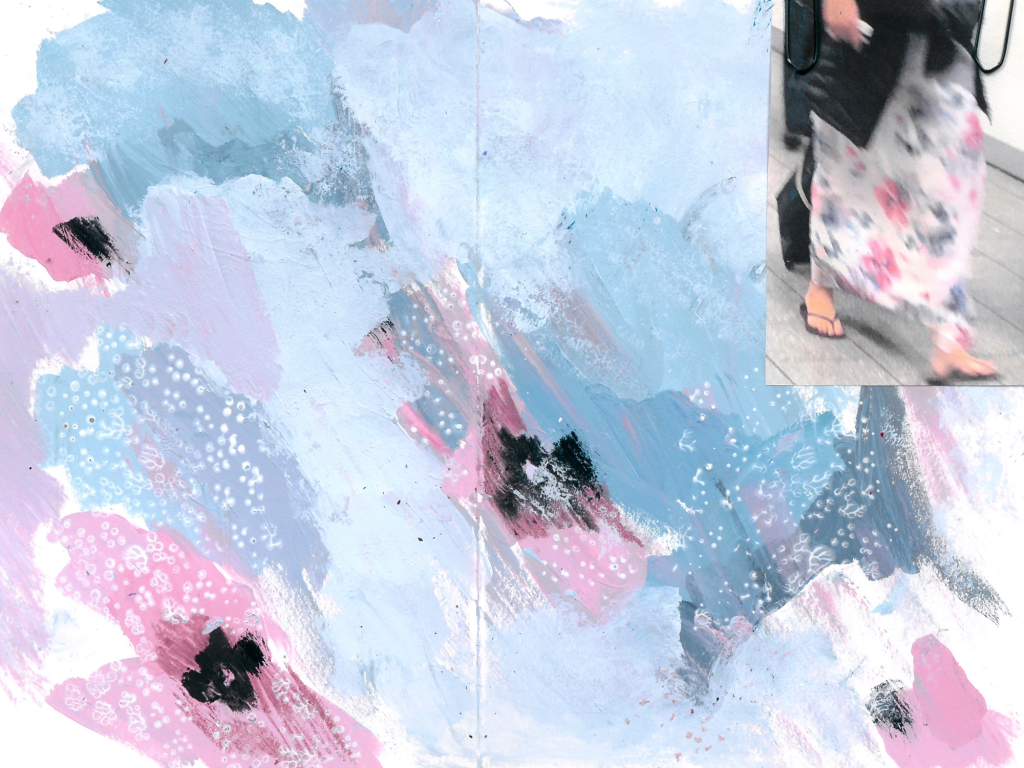
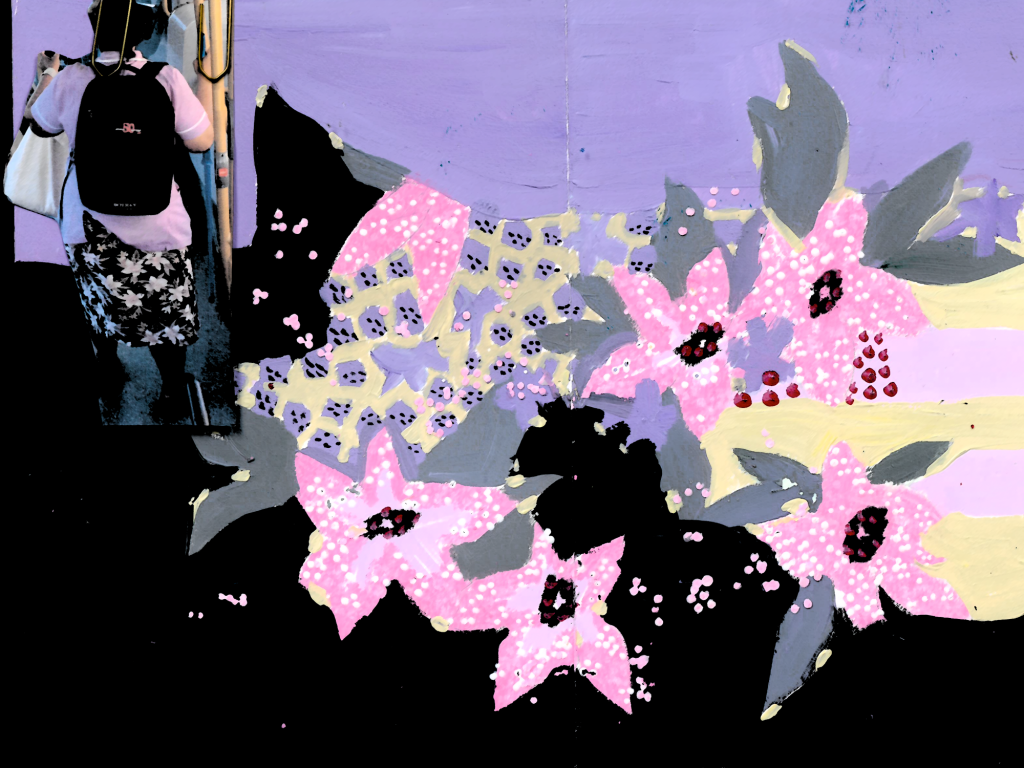
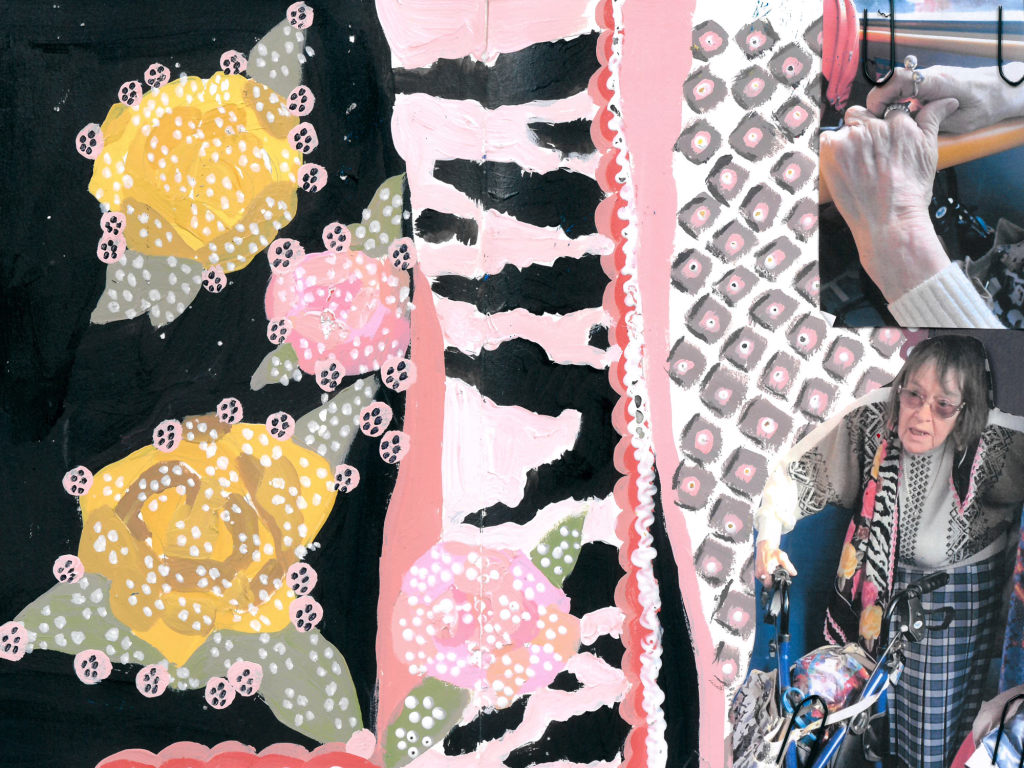
Sketches of commuters’ print
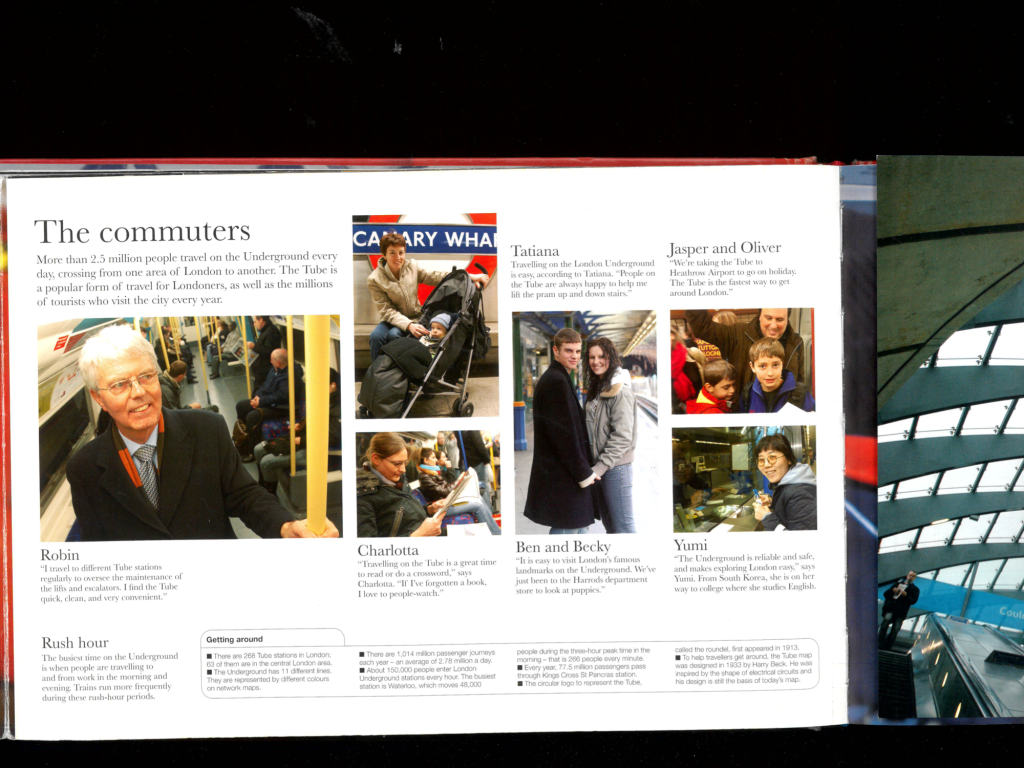
The commuters’ opinions
According to a recent poll, two-thirds of Londoners found using public transport the most stressful part of living in the capital. Commuting is generally considered an unpleasant activity, and when you factor in the time it takes to travel to work in London, it is not surprising that many professionals and businesses are looking for alternative ways of working.
Commuting to London by train is all part of life in the capital as the city has the lowest levels of car ownership in the UK and the highest proportions of commuters using public transport in the country.
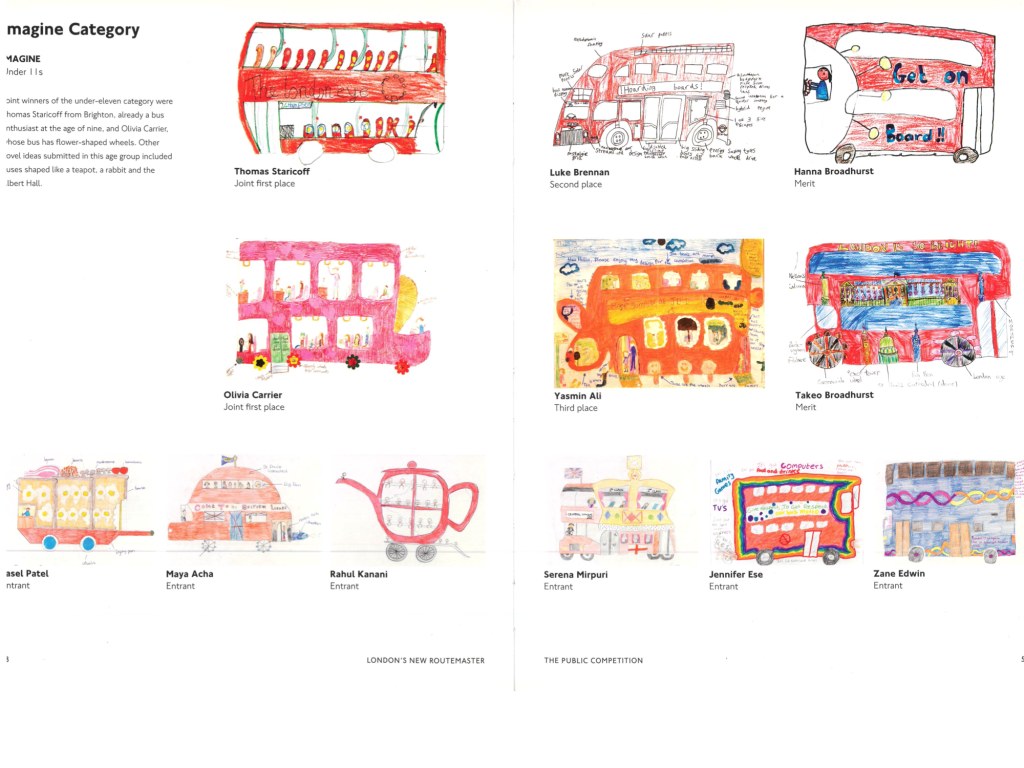
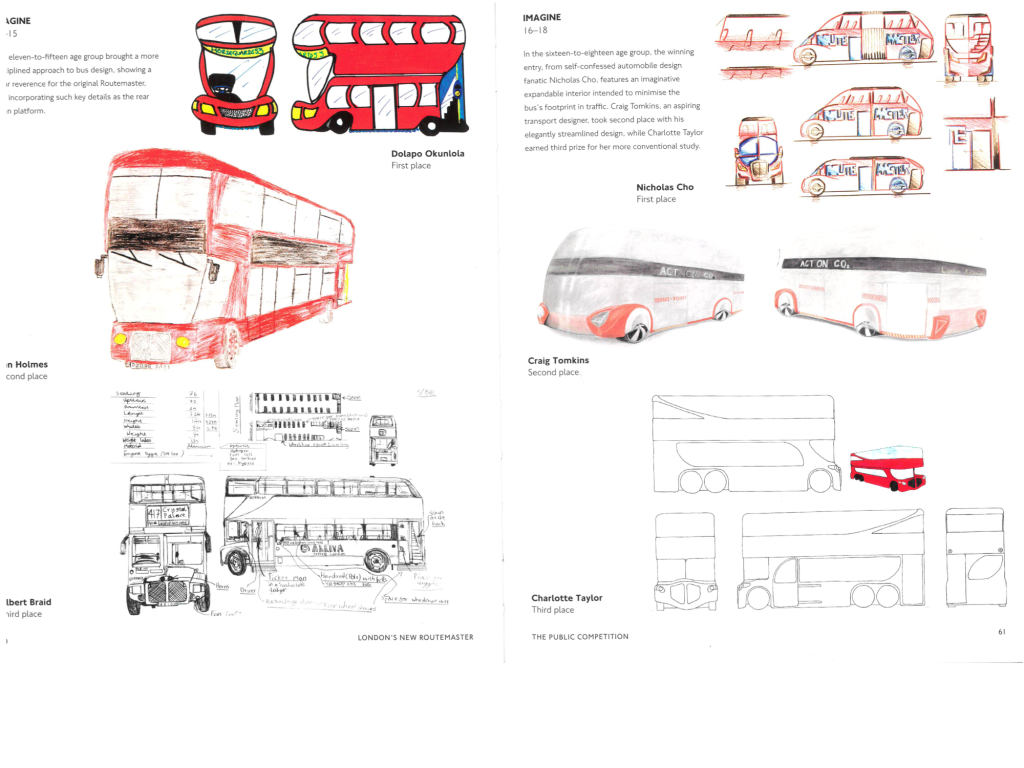
The public competition of bus design
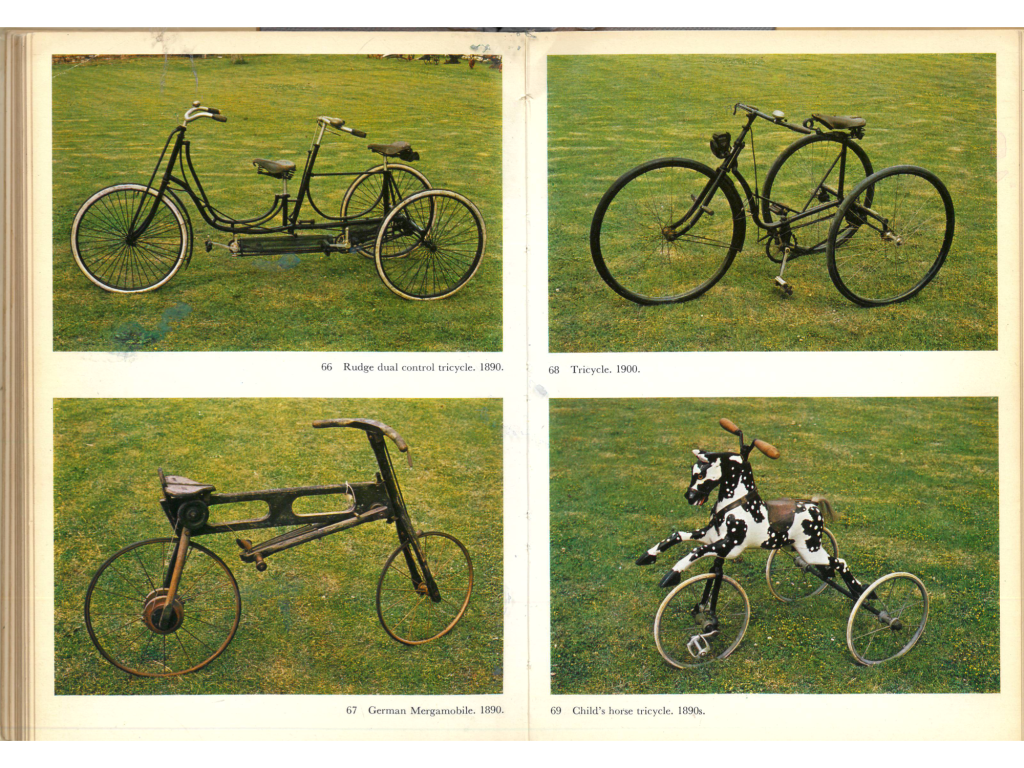
Vintage bicycles add more leisure in cycling
Is It Feasible to Cycle to Work in London?
Active travel like walking and cycling to work has seen an increase as it can take some of the stress out of commuting. Recent research has found that active travel can make commuters feel better physically and mentally. The two-decade-long study looked at 18, 000 commuters over this period and found that those who chose active modes of transport experienced improved psychological well-being. These commuters generally experienced less strain and stress, increased concentration and improved sleep, leaving them more rested and relaxed.
According to Strava, a running and cycling logging app, London commutes by bike more than any other city in the world. Bike commuting has gained in popularity with almost 10, 000 rides uploaded every day.
While cycling during rush hour can be quite stressful, peak traffic is often quite slow in London, with cars often driving slower than cyclists. There are also several biking paths, and almost every traffic light has an area reserved for cyclists. London also has six Cycle Superhighways, which run from east to west and from north to south.
These are the five busiest routes for cyclists:
• Regent’s Canal Towpath, from Hackney to Islington • Hyde Park Loop • Tavistock Place • Old Street/Clerkenwell Road/Theobalds Road • A3 from Clapham to Southwark Bridge, London Bridge or Blackfriars Bridge
Sketches of commuters’ print
The commuters’ opinions
According to a recent poll, two-thirds of Londoners found using public transport the most stressful part of living in the capital. Commuting is generally considered an unpleasant activity, and when you factor in the time it takes to travel to work in London, it is not surprising that many professionals and businesses are looking for alternative ways of working.
Commuting to London by train is all part of life in the capital as the city has the lowest levels of car ownership in the UK and the highest proportions of commuters using public transport in the country.
The public competition of bus design
Vintage bicycles add more leisure in cycling
Is It Feasible to Cycle to Work in London?
Active travel like walking and cycling to work has seen an increase as it can take some of the stress out of commuting. Recent research has found that active travel can make commuters feel better physically and mentally. The two-decade-long study looked at 18, 000 commuters over this period and found that those who chose active modes of transport experienced improved psychological well-being. These commuters generally experienced less strain and stress, increased concentration and improved sleep, leaving them more rested and relaxed.
According to Strava, a running and cycling logging app, London commutes by bike more than any other city in the world. Bike commuting has gained in popularity with almost 10, 000 rides uploaded every day.
While cycling during rush hour can be quite stressful, peak traffic is often quite slow in London, with cars often driving slower than cyclists. There are also several biking paths, and almost every traffic light has an area reserved for cyclists. London also has six Cycle Superhighways, which run from east to west and from north to south.
These are the five busiest routes for cyclists:
• Regent’s Canal Towpath, from Hackney to Islington • Hyde Park Loop • Tavistock Place • Old Street/Clerkenwell Road/Theobalds Road • A3 from Clapham to Southwark Bridge, London Bridge or Blackfriars Bridge
Sketches of commuters’ print
The commuters’ opinions
According to a recent poll, two-thirds of Londoners found using public transport the most stressful part of living in the capital. Commuting is generally considered an unpleasant activity, and when you factor in the time it takes to travel to work in London, it is not surprising that many professionals and businesses are looking for alternative ways of working.
Commuting to London by train is all part of life in the capital as the city has the lowest levels of car ownership in the UK and the highest proportions of commuters using public transport in the country.
The public competition of bus design
Vintage bicycles add more leisure in cycling
Is It Feasible to Cycle to Work in London?
Active travel like walking and cycling to work has seen an increase as it can take some of the stress out of commuting. Recent research has found that active travel can make commuters feel better physically and mentally. The two-decade-long study looked at 18, 000 commuters over this period and found that those who chose active modes of transport experienced improved psychological well-being. These commuters generally experienced less strain and stress, increased concentration and improved sleep, leaving them more rested and relaxed.
According to Strava, a running and cycling logging app, London commutes by bike more than any other city in the world. Bike commuting has gained in popularity with almost 10, 000 rides uploaded every day.
While cycling during rush hour can be quite stressful, peak traffic is often quite slow in London, with cars often driving slower than cyclists. There are also several biking paths, and almost every traffic light has an area reserved for cyclists. London also has six Cycle Superhighways, which run from east to west and from north to south.
These are the five busiest routes for cyclists:
• Regent’s Canal Towpath, from Hackney to Islington • Hyde Park Loop • Tavistock Place • Old Street/Clerkenwell Road/Theobalds Road • A3 from Clapham to Southwark Bridge, London Bridge or Blackfriars Bridge
Sketches of commuters’ print
The commuters’ opinions
According to a recent poll, two-thirds of Londoners found using public transport the most stressful part of living in the capital. Commuting is generally considered an unpleasant activity, and when you factor in the time it takes to travel to work in London, it is not surprising that many professionals and businesses are looking for alternative ways of working.
Commuting to London by train is all part of life in the capital as the city has the lowest levels of car ownership in the UK and the highest proportions of commuters using public transport in the country.
The public competition of bus design
Vintage bicycles add more leisure in cycling
Is It Feasible to Cycle to Work in London?
Active travel like walking and cycling to work has seen an increase as it can take some of the stress out of commuting. Recent research has found that active travel can make commuters feel better physically and mentally. The two-decade-long study looked at 18, 000 commuters over this period and found that those who chose active modes of transport experienced improved psychological well-being. These commuters generally experienced less strain and stress, increased concentration and improved sleep, leaving them more rested and relaxed.
According to Strava, a running and cycling logging app, London commutes by bike more than any other city in the world. Bike commuting has gained in popularity with almost 10, 000 rides uploaded every day.
While cycling during rush hour can be quite stressful, peak traffic is often quite slow in London, with cars often driving slower than cyclists. There are also several biking paths, and almost every traffic light has an area reserved for cyclists. London also has six Cycle Superhighways, which run from east to west and from north to south.
These are the five busiest routes for cyclists:
• Regent’s Canal Towpath, from Hackney to Islington • Hyde Park Loop • Tavistock Place • Old Street/Clerkenwell Road/Theobalds Road • A3 from Clapham to Southwark Bridge, London Bridge or Blackfriars Bridge
Sketches of commuters’ print
The commuters’ opinions
According to a recent poll, two-thirds of Londoners found using public transport the most stressful part of living in the capital. Commuting is generally considered an unpleasant activity, and when you factor in the time it takes to travel to work in London, it is not surprising that many professionals and businesses are looking for alternative ways of working.
Commuting to London by train is all part of life in the capital as the city has the lowest levels of car ownership in the UK and the highest proportions of commuters using public transport in the country.
The public competition of bus design
Vintage bicycles add more leisure in cycling
Is It Feasible to Cycle to Work in London?
Active travel like walking and cycling to work has seen an increase as it can take some of the stress out of commuting. Recent research has found that active travel can make commuters feel better physically and mentally. The two-decade-long study looked at 18, 000 commuters over this period and found that those who chose active modes of transport experienced improved psychological well-being. These commuters generally experienced less strain and stress, increased concentration and improved sleep, leaving them more rested and relaxed.
According to Strava, a running and cycling logging app, London commutes by bike more than any other city in the world. Bike commuting has gained in popularity with almost 10, 000 rides uploaded every day.
While cycling during rush hour can be quite stressful, peak traffic is often quite slow in London, with cars often driving slower than cyclists. There are also several biking paths, and almost every traffic light has an area reserved for cyclists. London also has six Cycle Superhighways, which run from east to west and from north to south.
These are the five busiest routes for cyclists:
• Regent’s Canal Towpath, from Hackney to Islington • Hyde Park Loop • Tavistock Place • Old Street/Clerkenwell Road/Theobalds Road • A3 from Clapham to Southwark Bridge, London Bridge or Blackfriars Bridge
Sketches of commuters’ print
The commuters’ opinions
According to a recent poll, two-thirds of Londoners found using public transport the most stressful part of living in the capital. Commuting is generally considered an unpleasant activity, and when you factor in the time it takes to travel to work in London, it is not surprising that many professionals and businesses are looking for alternative ways of working.
Commuting to London by train is all part of life in the capital as the city has the lowest levels of car ownership in the UK and the highest proportions of commuters using public transport in the country.
The public competition of bus design
Vintage bicycles add more leisure in cycling
Is It Feasible to Cycle to Work in London?
Active travel like walking and cycling to work has seen an increase as it can take some of the stress out of commuting. Recent research has found that active travel can make commuters feel better physically and mentally. The two-decade-long study looked at 18, 000 commuters over this period and found that those who chose active modes of transport experienced improved psychological well-being. These commuters generally experienced less strain and stress, increased concentration and improved sleep, leaving them more rested and relaxed.
According to Strava, a running and cycling logging app, London commutes by bike more than any other city in the world. Bike commuting has gained in popularity with almost 10, 000 rides uploaded every day.
While cycling during rush hour can be quite stressful, peak traffic is often quite slow in London, with cars often driving slower than cyclists. There are also several biking paths, and almost every traffic light has an area reserved for cyclists. London also has six Cycle Superhighways, which run from east to west and from north to south.
These are the five busiest routes for cyclists:
• Regent’s Canal Towpath, from Hackney to Islington • Hyde Park Loop • Tavistock Place • Old Street/Clerkenwell Road/Theobalds Road • A3 from Clapham to Southwark Bridge, London Bridge or Blackfriars Bridge
Is It Feasible to Cycle to Work in London?
Active travel like walking and cycling to work has seen an increase as it can take some of the stress out of commuting. Recent research has found that active travel can make commuters feel better physically and mentally. The two-decade-long study looked at 18, 000 commuters over this period and found that those who chose active modes of transport experienced improved psychological well-being. These commuters generally experienced less strain and stress, increased concentration and improved sleep, leaving them more rested and relaxed.
According to Strava, a running and cycling logging app, London commutes by bike more than any other city in the world. Bike commuting has gained in popularity with almost 10, 000 rides uploaded every day.
While cycling during rush hour can be quite stressful, peak traffic is often quite slow in London, with cars often driving slower than cyclists. There are also several biking paths, and almost every traffic light has an area reserved for cyclists. London also has six Cycle Superhighways, which run from east to west and from north to south.
These are the five busiest routes for cyclists:
• Regent’s Canal Towpath, from Hackney to Islington • Hyde Park Loop • Tavistock Place • Old Street/Clerkenwell Road/Theobalds Road • A3 from Clapham to Southwark Bridge, London Bridge or Blackfriars Bridge
Panda theme underground in Chengdu city
The subway was originally just a means of transportation, and generally few people pay attention to the characteristics of the subway itself. The “Panda Train” of Chengdu Metro Line 3 itself is a unique customization, which has become a “Panda Feature” in all aspects of the train.






-1.png)
-1.png)

.png)